7 Key Steps to a Successful Prop Firm Trading Strategy
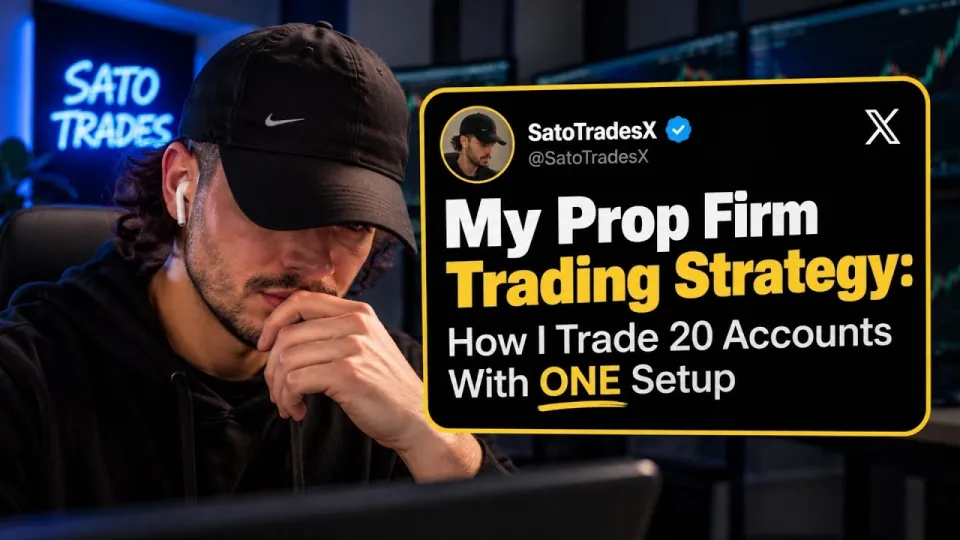
Video: Prop Firm Trading Strategy: How to Pass a Funded Challenge in 2026
· based on the channel Sato Trades
Passing a prop firm challenge requires a solid, mechanical trading strategy tailored to meet the strict evaluation criteria of prop trading firms. A successful prop firm trading strategy focuses on futures trading, particularly using the 1-minute chart to identify precise entry points, while maintaining strict risk management rules to protect your funded account and secure consistent payouts. For traders aiming to pass these challenges efficiently, daily ES (E-mini S&P 500) and NQ (Nasdaq 100) levels serve as crucial reference points for potential longs and shorts.
1 Use Precise Daily and Intraday Levels for Entries
An effective prop firm trading strategy hinges on marking key daily and intraday levels in your charting platform, such as TradingView. These levels act as confluence zones where price is likely to react. Start your session by posting and grouping these levels before the market open, then watch for price action around them to determine high-probability entry points. Focus on ES and NQ futures as they offer liquidity and volatility suitable for day trading.
2 Employ a Mechanical Trading System on the 1-Minute Chart
Using a mechanical trading system based on the 1-minute chart allows for precise timing and consistent execution. This system should define clear rules for entries, stop losses, and take profits, eliminating emotional decision-making. The goal is to trade setups that align with your pre-marked levels and market structure, ensuring confluence and higher win rates.
3 Follow Strict Risk Management Rules
Risk management is the cornerstone of passing prop firm challenges. Limit your risk per trade to a small percentage of your account, typically 1% or less, to avoid blowing the funded account. Use limit orders, stop loss, and take profit orders that you set and leave in place without adjusting impulsively. This discipline protects your capital and helps you meet the challenge requirements for consistency and drawdown limits.
4 Understand Market Structure to Know When Not to Trade
A vital part of this strategy is recognizing when the market structure indicates a low-probability trade or increased risk. Avoid trading against high-timeframe trends or during choppy price action with no clear direction. Identifying these conditions helps prevent unnecessary losses and improves overall performance.
5 Scale Your Trading Across Multiple Prop Firm Accounts
To increase your earnings and experience, consider managing multiple prop firm accounts simultaneously. Using trade copiers and brokers like Tradovate can help you automate this process effectively. Scaling allows you to benefit from payouts across accounts while diversifying risk.
6 Use TradingView Tools for Efficient Level Management
Organize all your marked levels by grouping and hiding them in TradingView to reduce chart clutter and improve focus. This practical tip streamlines your analysis and helps maintain clarity during fast-paced trading sessions.
7 Treat Prop Firm Trading Like a Professional Career
Approach prop firm trading with professionalism by following a proven mechanical framework and maintaining trading psychology discipline. Consistency, patience, and adherence to your strategy are essential to stop failing evaluations and start earning reliable payouts from prop firms.
Useful Links
- Daily ES & NQ Levels and Tutorials: https://satotrades.com/vip
- Best Futures Prop Firms Guide: https://satotrades.com/guides/best-futures-prop-firms
- Free Discord Community: https://discord.gg/Yt5PuQjXRp
- Trade Copier Service: https://portal.tradecopia.com/signup?via=SATO
Итог
Successfully passing a prop firm challenge demands a mechanical, disciplined approach focusing on futures trading with clear daily levels, strict risk management, and understanding market structure. Scaling accounts and using professional tools further enhance your edge. This strategy, detailed by Sato Trades, offers a practical roadmap to reliable prop firm payouts and long-term success. For ongoing support and daily trading levels, visit the Sato VIP site linked above.
Key takeaways
- Use a 1-minute futures chart for precise entries
- Trade major indices like ES and NQ with defined daily levels
- Strict risk management is crucial for funded accounts
- Mechanical trading systems improve consistency in prop firm challenges
- Avoid trading against high-timeframe market structure
- Scale your trading by managing multiple prop accounts
- Limit orders, stop loss, and take profits must be set and left unchanged
Questions & answers
What is the best time frame to use in a prop firm trading strategy?
The 1-minute chart is recommended for precise entry and exit points in prop firm futures trading, allowing for mechanical and consistent trade execution.
How important is risk management in passing a prop firm challenge?
Risk management is critical; limiting risk to around 1% per trade and setting fixed stop losses protects your funded account from large losses and helps meet the challenge's consistency requirements.
Can I trade multiple prop firm accounts at the same time?
Yes, scaling by managing multiple prop firm accounts using trade copiers and brokers like Tradovate can increase payout opportunities and diversify risk exposure.
How do I know when not to trade during a session?
Avoid trading when the market structure indicates choppy or unclear price action or when trading against high-timeframe trends, as these conditions typically reduce trade quality and increase risk.
Source: Prop Firm Trading Strategy: How to Pass a Funded Challenge in 2026 · Markdown version